What should be recorded for repeated assemblies?
Keep each current drawing and its material, thickness, quantity and weld location, noting changes in access or part presentation.

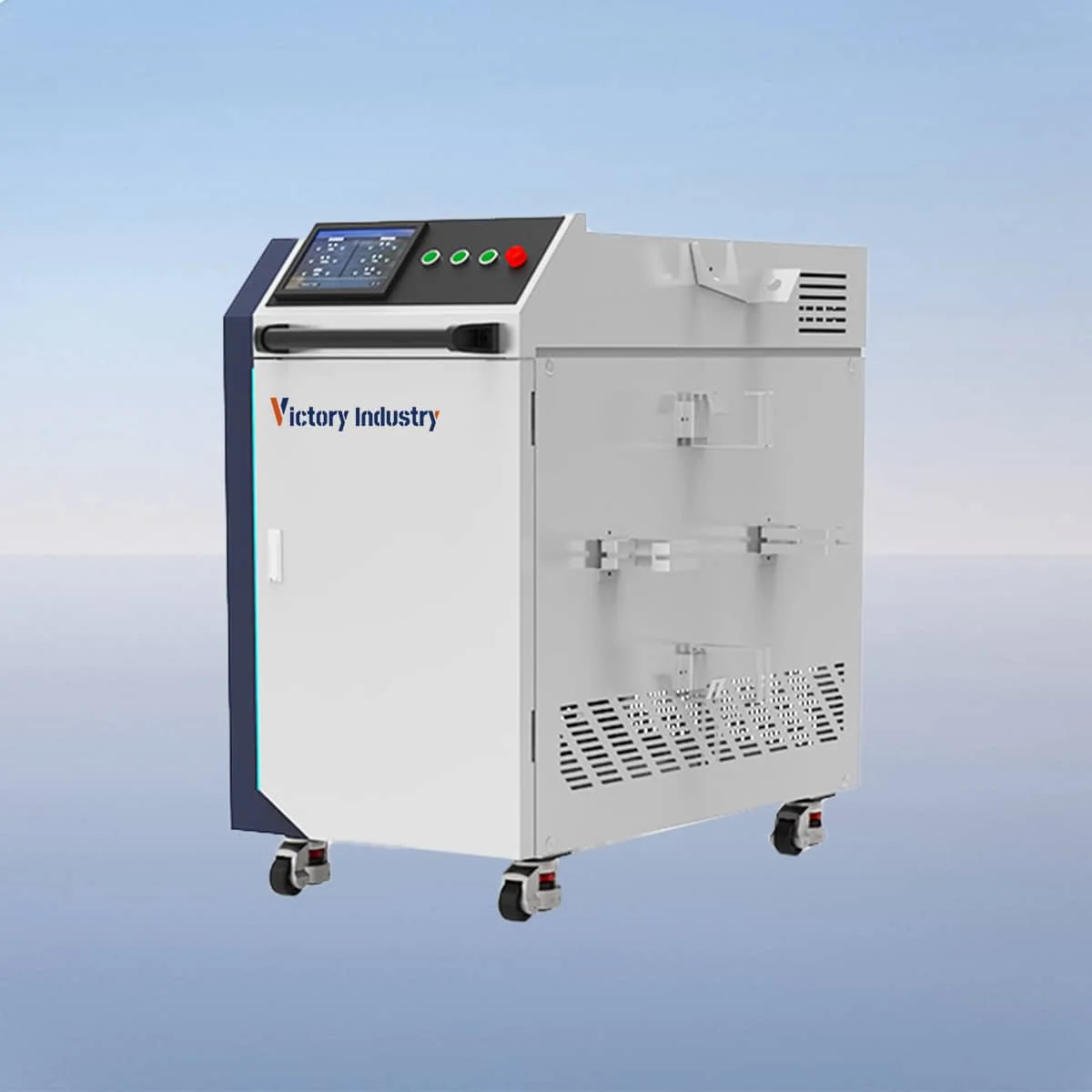
Laser Welding Machine
VIW2000D welding application configuration should make repeated joints and revised assemblies distinguishable in the inquiry. Keep the material and thickness record with each current drawing. A shared joint name or the same nominal power should not conceal a change in fit, access or required weld location.
VIW2000D is the 2000W model in the VIW-D handheld welding range, with a listed wavelength of 1080nm. The series identifies a wheeled movable structure, generator and industrial water chiller. It also describes a double-swing welding head with dual-axis head movement, without establishing a robot or a complete automatic process.
| Specification | VIW2000D |
|---|---|
| Laser Power | 2000W |
| Laser Wave Length | 1080nm |
| Laser Source | Raycus, JPT, IPG, Max |
| Fiber Length | Standard 10m, Maximum Support 20m |
| Cooling Method | Water Cooling |
| Support Language | English, Chinese, Japanese, Korean, Russian |
| Working Humidity | <70% No Condensation |
Configuration options vary by model. Confirm the final specification, selected components and operating requirements with your quotation.
The VIW2000D joint project brief should identify drawing revisions, materials and thicknesses of the joined parts, weld location and quantity. If a joint is repeated in different assemblies, explain differences in the surrounding geometry and how the parts are presented. This keeps repeated work from being treated as identical where the requirements differ.
VIW3000D lists 3000W against the 2000W rating of VIW2000D. Compare those as laser-power entries. Do not treat the difference as a stated improvement in cycle time, penetration or allowable material thickness; keep the same joint details beside the equipment discussion.
VIW-D controls are described as supporting parameter setting and monitoring, including power, speed and focus adjustment. The double-swing head description identifies head movement. Neither description supplies a numeric swing range or proves that a revised joint has an already established process or outcome.
VIW2000D equipment options should be considered against the current revision. If a weld location changes, show it on the drawing. If material or thickness changes too, state it separately. A previous equipment response should not be used as silent confirmation of a job with different joint details.
Describe the intended work position and confirm the supplied fiber length. The source table lists 10m as standard and 20m as maximum support. Those entries do not mean that 20m is automatically supplied or that every position around a revised assembly has been confirmed as accessible.
Keep fixture and handling responsibilities clear. State what will hold and present the parts, and identify any unanswered requirements. The dual-axis head description is not a statement that all joint angles can be reached, nor that part positioning or an entire production arrangement is included.
VIW2000D quotation requirements should specify the selected source from Raycus, JPT, IPG and Max, the fiber supplied and the water-cooled arrangement. Ask the proposed package to identify its head, chiller and other included items. Label changes from earlier offers separately from the application revisions.
English, Chinese, Japanese, Korean and Russian are listed interface languages. Working Humidity is stated as below 70% with no condensation. Give the destination and request installation and setup information for the actual offered equipment. These entries should not be extended into a promise about training or support coverage.
Before comparing final offers, consolidate the current drawings, selected equipment and unresolved joint questions. Use the linked series and next power model to review the published differences. The contact page can carry one complete revision record with access, fixture and layout questions still visible.
Keep each current drawing and its material, thickness, quantity and weld location, noting changes in access or part presentation.
It describes movement at the welding head. It does not establish a robot, its axes or an automatic production process.
The table provides laser-power ratings. It does not give a cycle-time or penetration result for a particular assembly.
Describe it and confirm the supplied fiber and proposed arrangement. The table lists standard 10m with maximum support of 20m.
Separate changes to source, head, fiber and supplied equipment from changes to the joint drawing, retaining unanswered installation and fixture questions.
Compare VIW-D Laser Welding Machine models
Share your material, dimensions and process. Start a conversation about the right configuration.