Which functions does VIW-T combine?
The source identifies welding, cleaning and cutting in a three-in-one head. A separate fourth function should not be added from another series.

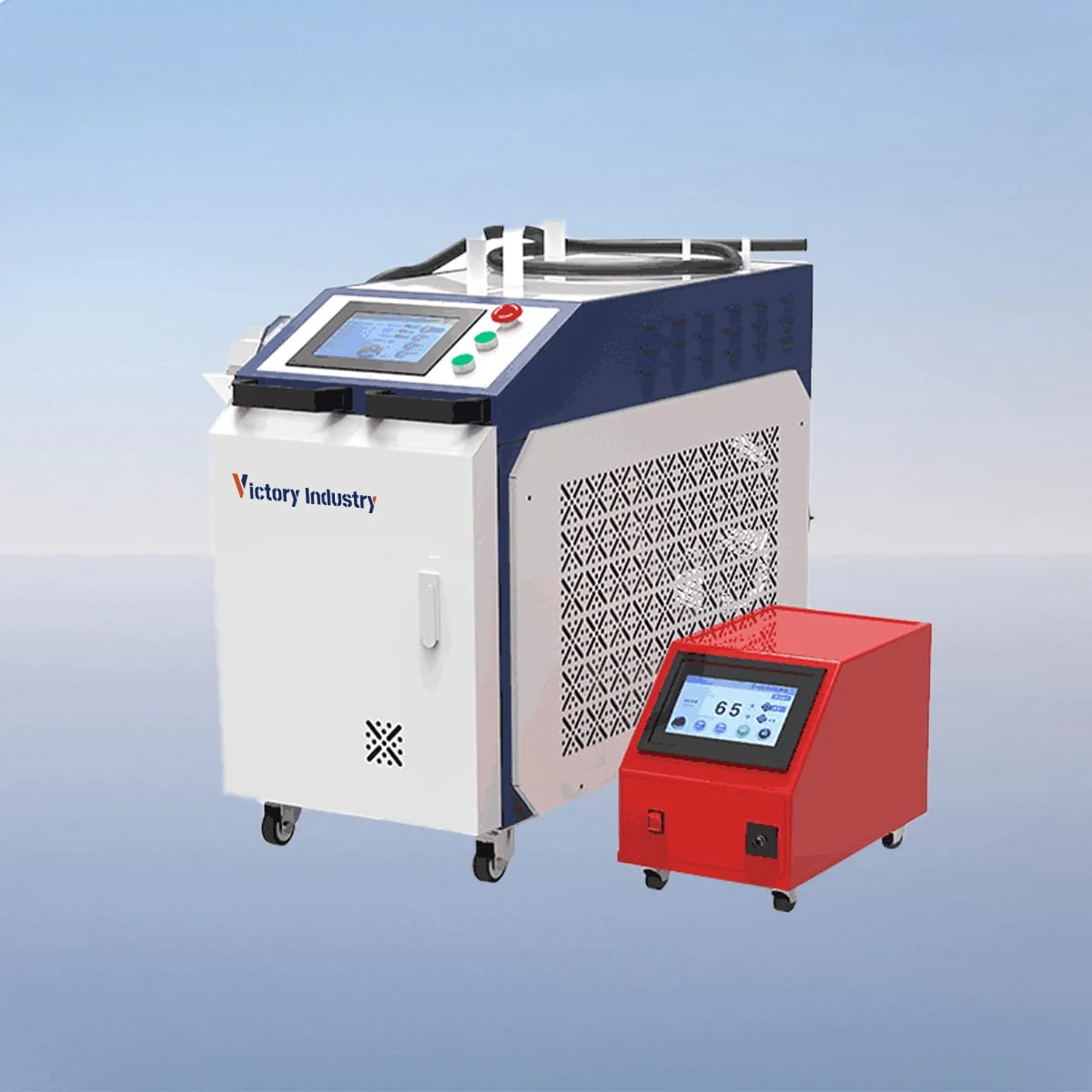
Laser Welding Machine
VIW-T Laser Welding Machine configuration starts by ranking the three tasks described for its three-in-one head: welding, cleaning and cutting. The model table lists VIW1500T, VIW2000T and VIW3000T with 1500W, 2000W and 3000W laser power respectively. A clear enquiry identifies which task drives the purchase and which others are secondary requirements.
For example, a buyer may need regular welding with occasional cleaning, while another proposal may depend on a particular cutting task. Give those requirements separate descriptions. The three-function identity is useful for a shortlist, but it does not define material limits, accessory changes or the result on each proposed workpiece.
Choose an individual model below to view its complete technical specification. The series overview shows selected parameters for comparison.
The three-in-one head is described for welding, cleaning and cutting. Preserve those three functions when comparing the range. Do not add a separate fourth function from another series or assume that the word multifunction means every requested operation is included. Ask for the proposed head setup and accessories for the tasks that matter to your purchase.
The shared wavelength is 1080nm, and Raycus, JPT, IPG and Max are the listed source alternatives. The table specifies water cooling, while the description names an industrial water chiller and a movable wheeled structure. Record the selected power, source and head package as a specific configuration for review.
The published controls provide settings and monitoring, including adjustments to power, speed and focus. This does not establish an automatic recipe or a guaranteed changeover time between functions. Request the relevant equipment and setup information for each task, keeping a control feature separate from an application-performance claim.
For VIW-T welding requirements, submit material grades, thicknesses, joint drawings and the required finished condition. A cleaning task needs the substrate, surface condition and layer to be removed. A cutting task needs material, thickness and geometry. Give each task a clear reference so a response about one function cannot be mistaken for acceptance of all three.
Mark the priority and expected frequency of each operation. If two tasks concern the same component, describe the intended sequence in the buyer's process and retain the individual requirements. That sequence is a project proposal for discussion; the three-in-one feature does not establish an automatic production line or prove how long the combined work will take.
The Fiber Length row reads Standard 10m, Maximum Support 20m. Confirm what is supplied with the selected model and head arrangement. Maximum support should retain its qualification, and the actual machine position and routing need to be considered separately from the fiber figure when discussing access to a component.
Working Humidity is specified as below 70% with no condensation. The listed languages are English, Chinese, Japanese, Korean and Russian. State the desired interface language and intended work location. Ask for actual dimensions, connections and installation requirements, rather than treating a movable structure as confirmation of suitability for every site.
The source describes an interlock, emergency stop button and casing around internal components. Request equipment documentation for the offered arrangement and clarify which accessories belong to each function. The final comparison should keep the selected power and source alongside the three task descriptions, their priorities and any unresolved setup or installation questions.
The source identifies welding, cleaning and cutting in a three-in-one head. A separate fourth function should not be added from another series.
Identify the task that drives the purchase, then describe the secondary tasks separately. Provide the actual workpiece and required result for each one.
It does not define every setup or accessory requirement. Ask the offer to identify the arrangement proposed for each confirmed task.
Describe the substrate, visible condition, layer to be removed and required final state. Keep those details separate from any welding or cutting drawing.
Use the same task priorities and workpiece descriptions, then compare named models, sources, heads, accessories and answers to the outstanding setup questions.
Share your material, dimensions and process. Start a conversation about the right configuration.