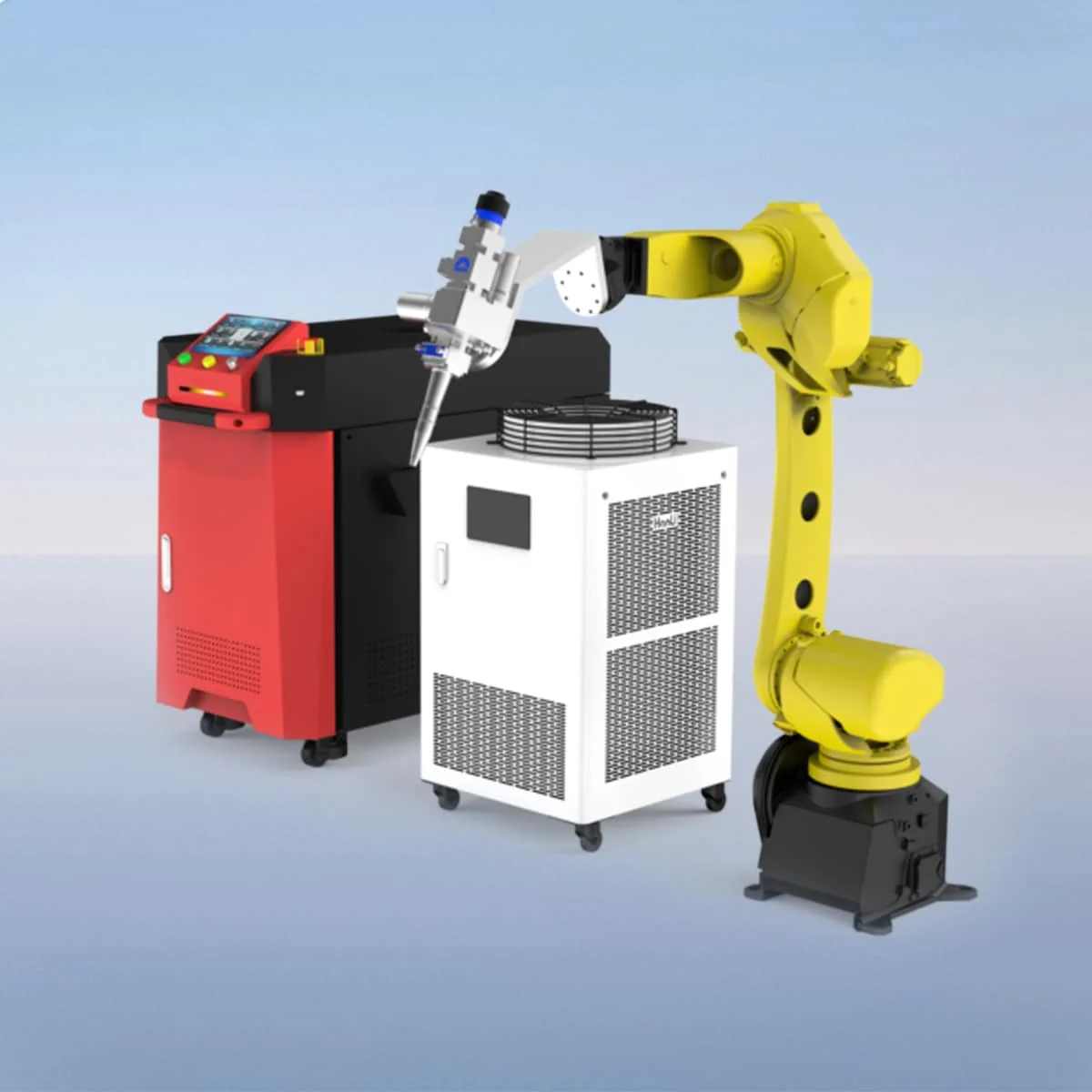
VIW-R Laser Welding Machine
Laser Welding Machine
- Laser Power
- 1500W / 2000W / 3000W
- Laser Wave Length
- 1080nm

Explore this automatic laser welding machine configuration comparison guide. Compare model specifications and configuration options, then prepare the requirements for your equipment enquiry.
Laser Welding Machine
This automatic laser welding machine configuration comparison focuses on VIW-R, the automatic entry in the Welding Systems catalog. The listed models are VIW1500R, VIW2000R and VIW3000R. Use the comparison to separate the machine configuration from the surrounding project: the workpiece, proposed fixtures, robot integration and responsibilities that need to be defined for an offer.
Begin with a description of the repeated joint you want to weld. Identify the drawing revision, material and part arrangement, then name the VIW-R model options you would like considered. This gives the configuration discussion a consistent starting point. The category identity does not establish that a complete production cell, every fixture or an unattended operating process is included in the machine supply.
Open VIW-R specifications →Prepare a welding project brief →The VIW-R source explicitly describes robotic arm integration for repetitive welding tasks, together with a fixed structure, welding head, laser generator and industrial water chiller. These are the published elements from which to begin a robotic welding system discussion. Ask which parts of the proposed arrangement are supplied with the machine and which are separately selected or provided by your team.
Identify any robot, controller or positioning equipment you already have. If new equipment is needed, ask for its specification and responsibility to be listed in the proposal. The published integration description does not identify a particular robot brand, axis count, payload or reach. Keep those questions explicit instead of allowing a general phrase about automation to stand in for a complete system specification.
For laser welding machine selection, prepare a drawing that locates the seam and shows the surrounding part geometry. State the material specification, thickness and required joint result. Describe how you intend to hold the part and which surfaces must remain accessible. These details are application requirements to review, not proof that a particular fixture or robot path has already been designed.
If several assemblies use the proposed equipment, identify the differences between them and the parts that represent the main workload. Ask what sample and inspection information would be needed for an assessment. Keep proposed cycle requirements separate from demonstrated results. A configuration discussion should make the workpiece assumptions visible before a numerical production expectation is treated as an agreed outcome.
VIW1500R is listed at 1500W, VIW2000R at 2000W and VIW3000R at 3000W. The table gives 1080nm wavelength and water cooling, with Raycus, JPT, IPG and Max listed as source options. Ask the offer to identify the selected source and power for your application. The range of model choices does not establish a welding thickness or joint result on the part you supplied.
The fiber entry distinguishes standard 10m from maximum support 20m. Keep the selected length with the proposed layout instead of automatically specifying the maximum as standard. The VIW-R control description includes monitoring and adjustment of welding parameters. It does not establish automatic process development for every part, so ask how the proposed settings and operating responsibilities will be addressed for your project.
Prepare a project record with separate entries for the laser equipment, robot-related items, fixtures, part presentation and any surrounding installation work. Ask the proposal to identify what is included, what is optional and what remains your responsibility. This is a way to define the purchase, not a statement that all those items are already part of the VIW-R package.
Include the intended installation location and any available layout drawings. If your team expects assistance with installation, programming or operator instruction, state that request and ask for the offered scope. Keep the responsibilities and requirements attached to the same configuration revision. A change in the workpiece or surrounding equipment can otherwise leave different teams discussing different versions of the project.
Submit the VIW-R shortlist with the joint drawing, fixture information and the open integration questions. Ask the response to distinguish the published machine parameters from the additional application details that still need assessment. Keep any sample identifiers and acceptance requirements with the proposal so the basis of a result can be checked later.
Victory Industry is based in Jinan, China. Use the contact page to discuss the configuration and the support requested for your destination. Retain the selected components, drawing revisions and scope changes as the enquiry develops. The intended outcome is a clearly described welding project with traceable responsibilities, rather than a general automatic-machine label being treated as a complete production agreement.
Discuss a VIW-R project configuration →Review the welding equipment catalog →It covers VIW-R and its VIW1500R, VIW2000R and VIW3000R models. The surrounding robot, fixture and installation scope should be identified separately for the proposed project.
No. The source describes integration but does not establish those particulars. Ask the offer to identify the robot specification and responsibility where a robot is part of the project.
Do not assume that. Describe the part-holding requirements and ask which fixtures or positioning items are supplied, separately quoted or provided by your team.
The table distinguishes standard 10m from maximum support 20m. Confirm the selected arrangement and its relevance to the proposed layout.
Identify the workpiece, selected configuration, sample and inspection requirements. Keep the application assessment separate from a general machine description or an unverified production target.
Share your material, dimensions and process. Start a conversation about the right configuration.